Corrugated boxes are the backbone of modern product shipping. Every day, millions of packages move across the country inside corrugated shipping boxes, and for good reason: they’re lightweight, incredibly strong, and cost-effective at scale.
At Boxes For Products, we manufacture custom corrugated boxes in every size, wall thickness, and print specification you can think of. Our corrugated packaging protects fragile electronics, heavy automotive parts, perishable food items, and retail goods with equal reliability.
If you’re searching for a trusted partner to produce corrugated boxes in bulk, with exact dimensions and branded printing, you’ve found the right manufacturer.

What Are Corrugated Boxes?
Corrugated boxes aren’t the same as plain cardboard. While most people use the terms interchangeably, corrugated material has a very specific, engineered structure that gives it far more strength per ounce than standard paperboard or cardboard.
A corrugated box is made from three key layers:
- Outer linerboard: A flat, kraft-based sheet that forms the visible exterior surface of the box. It provides stiffness and accepts printed graphics.
- Fluting (the corrugated medium): A wavy, arched layer sandwiched between the liners. This fluted medium acts like a series of columns, absorbing impact and providing cushioning during transit.
- Inner linerboard: Another flat sheet on the inside that adds structural rigidity and protects the product from direct contact with the fluting.
This three-layer sandwich is what makes corrugated boxes significantly stronger than regular cardboard. The fluted arches distribute weight evenly, resist crushing, and create air pockets that insulate products from temperature changes and vibration.
For businesses that need packaging they can actually trust during shipping, corrugated is the standard. There’s a reason the material has been used for over a century, and nothing has replaced it.
Types of Corrugated Boxes
Corrugated boxes come in single-wall, double-wall, and triple-wall configurations. The right choice depends on your product’s weight, fragility, and how far it needs to travel.
Single-Wall Corrugated Boxes
The most common type. One layer of fluting between two linerboards. Perfect for lightweight to medium-weight products, retail packaging, and standard ecommerce orders. Cost-effective and easy to print on.
Best for: Apparel, consumer goods, subscription boxes, food products under 30 lbs.
Double-Wall Corrugated Boxes
Two layers of fluting separated by three linerboard sheets. Nearly twice the crush resistance of single-wall. Ideal for heavy items, fragile products, and shipments that face rough handling during transit.
Best for: Electronics, glassware, industrial components, items 30 to 80 lbs.
Triple-Wall Corrugated Boxes
Three layers of fluting and four sheets of linerboard. The strongest corrugated construction available. Often used as a replacement for wooden crates in heavy-duty applications.
Best for: Automotive packaging, machinery, military spec shipments, items 80+ lbs.
Corrugated Flute Types Explained
The flute profile inside a corrugated box determines its cushioning ability, stacking strength, and printability. Here’s what each flute type brings to the table.
| Flute | Thickness | Flutes per Foot | Cushioning | Print Quality | Stacking Strength | Best Applications |
|---|---|---|---|---|---|---|
| A Flute | ~3/16" | 33 | Excellent | Good | Very Good | Fragile items, heavy cushioning needs, glass products |
| B Flute | ~1/8" | 47 | Good | Very Good | Good | Canned goods, die-cut displays, inner packaging |
| C Flute | ~11/64" | 39 | Very Good | Good | Very Good | General shipping, most corrugated shipping boxes, RSCs |
| E Flute | ~1/16" | 90 | Moderate | Excellent | Moderate | Retail packaging, cosmetic boxes, food-grade cartons |
| F Flute | ~1/32" | 125 | Light | Excellent | Light | Jewelry packaging, fast-food containers, micro-corrugated retail packaging |
C Flute is the industry workhorse. It strikes the best balance between protection and weight, which is why the majority of corrugated shipping boxes use this profile. E Flute and F Flute are popular for retail-ready packaging where print detail matters more than heavy cushioning. A Flute and B Flute often get combined into double-wall structures for maximum strength.
Not sure which flute type fits your product? Our team at Boxes For Products will recommend the right profile based on your product weight, shipping distance, and stacking requirements.
Industries That Use Corrugated Packaging
Corrugated packaging serves virtually every sector that ships physical goods. Here are some of the industries that rely on it most.
Ecommerce
Online retailers need corrugated shipping boxes that survive carrier handling while creating a memorable unboxing moment. Custom-printed e-commerce boxes are a staple for DTC brands.
Automotive
Heavy, oddly shaped parts demand double-wall and triple-wall corrugated packaging. Bumpers, brake rotors, and engine components all ship safely in custom-sized corrugated boxes.
Retail
Shelf-ready corrugated displays and branded retail packaging need high-quality print finishes. E-flute corrugated is especially popular for retail point-of-purchase displays.
Food & Beverage
Corrugated packaging keeps produce fresh, beverages secure, and frozen goods insulated. Food-grade liners and moisture-resistant coatings add extra protection for perishable items.
Electronics
Sensitive electronics need anti-static liners and custom foam inserts inside corrugated boxes. Double-wall configurations protect screens, circuit boards, and delicate components from impact.
Industrial Shipping
Bulk industrial parts, raw materials, and oversized equipment travel in heavy-duty corrugated shipping boxes. Triple-wall corrugated replaces wooden crates at a fraction of the weight and cost.
Custom Corrugated Boxes & Printing Options
A plain brown box gets the job done, but custom corrugated packaging does the job and builds your brand at the same time. At Boxes For Products, every corrugated box we produce can be fully customized to match your product requirements and brand identity.
Custom Sizing & Structural Options
- Any length, width, and depth you need. No forced standard sizes.
- Custom inserts, dividers, and partitions to hold multiple items securely.
- Die cut boxes with custom cutouts for windows, handles, or display openings.
- Regular slotted carton (RSC) configurations for standard shipping needs.
Branding & Print Capabilities
- Full CMYK 4-color printing for photo-quality graphics and detailed logos.
- Flexographic printing for cost-effective, high-volume runs.
- Pantone color matching for brand-exact reproduction.
- Interior printing for a premium unboxing experience.
Coatings & Finishes
- Matte and gloss lamination for a professional feel.
- UV spot coating to highlight logos or specific design elements.
- Aqueous coating for scuff resistance during shipping.
- Moisture-resistant and grease-resistant coatings for food-grade applications.
Custom corrugated packaging turns every shipment into a brand experience. When your box hits the doorstep with crisp graphics and a well-designed layout, it communicates quality before the product is even opened.
Bulk Corrugated Boxes & Wholesale Ordering
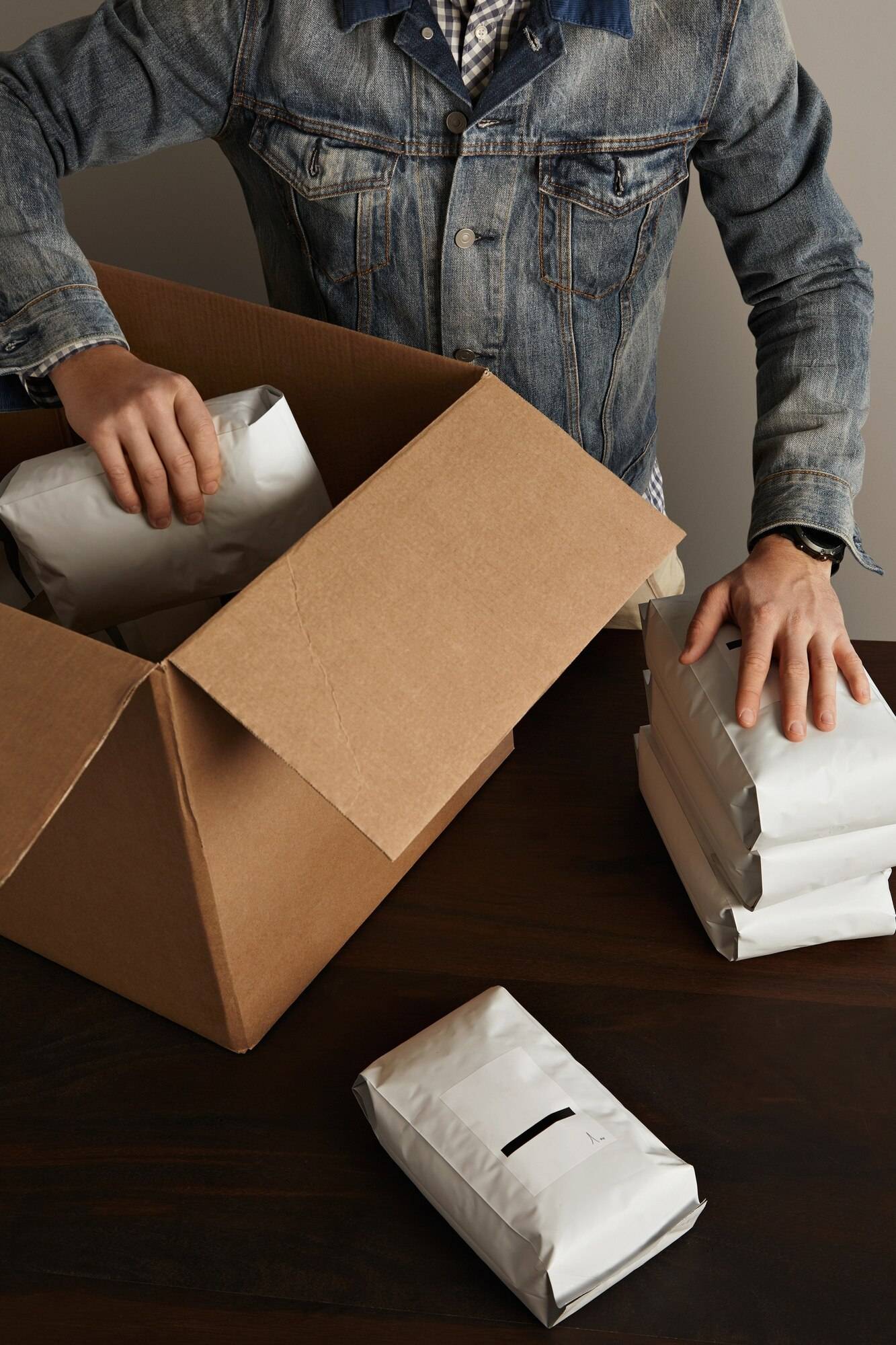
Ordering bulk corrugated boxes directly from a manufacturer like Boxes For Products gives you significant cost savings per unit, consistent quality across every order, and total control over specs.
How Wholesale Ordering Works
- Minimum Order Quantities: Our MOQs are flexible. We work with growing brands that need 500 units and established companies ordering 100,000+.
- Lead Times: Standard production runs take 2 to 4 weeks depending on complexity, quantity, and print specifications. Rush orders are available for time-sensitive needs.
- Shipping & Logistics: We ship nationwide from our Florida facility. Flat-packed boxes reduce freight costs and warehouse space requirements.
- Inventory Management: Large-volume clients can set up scheduled production runs so fresh stock arrives before you run out.
If you’re currently buying corrugated boxes from a distributor, you’re paying a markup. Going direct with a manufacturer cuts out the middleman and gives you a dedicated production team that knows your specs inside and out.
Bulk corrugated boxes are the smart play for any business that ships more than a few hundred packages a month. The per-unit savings compound fast.
Sustainability & Eco-Friendly Benefits of Corrugated Packaging
Corrugated packaging is one of the most sustainable packaging materials on the planet. It’s not a marketing talking point; it’s backed by hard numbers.
- Over 90% recovery rate: More corrugated cardboard gets recycled in the U.S. than any other packaging material. The paper fiber can be reprocessed 5 to 7 times before it breaks down.
- Renewable raw materials: Corrugated board is made from wood pulp, a renewable resource. Most manufacturers source from sustainably managed forests.
- Biodegradable: If a corrugated box ends up in a landfill (rare, given recycling rates), it decomposes naturally within weeks to months.
- Lightweight = lower emissions: Lighter packages mean fewer fuel costs and reduced carbon emissions per shipment compared to wood, metal, or plastic alternatives.
- Reusable: Many corrugated boxes are sturdy enough for multiple shipping cycles, further reducing waste.
Businesses that prioritize eco-conscious shipping practices gain real advantages with customers who care about environmental impact. To learn more about this topic, read our guide on the environmental benefits of using corrugated cardboard boxes.

Corrugated Boxes vs. Cardboard & Paperboard
People often call any brown box “cardboard,” but there are real structural differences that matter when you’re choosing packaging for your products.
Corrugated Board
- Multi-layer structure with fluted medium
- High crush and puncture resistance
- Ideal for shipping, heavy items, and stacking
- Available in single, double, and triple-wall
- Absorbs shock and insulates contents
Cardboard
- Single-layer, thicker paperboard stock
- Moderate stiffness, lower crush resistance
- Used for cereal boxes, shoe boxes, light packaging
- Not designed for heavy or long-distance shipping
- Lower cost for simple retail applications
Paperboard
- Thin, single-ply material
- Low structural strength
- Used for cosmetic cartons, food packaging, folding cartons
- Excellent printability and shelf appeal
- Not suitable for shipping protection on its own
The bottom line: if your product needs to survive a shipping environment, corrugated boxes are the correct choice. Cardboard and paperboard serve retail display and light-duty purposes well, but they lack the multi-layer strength that corrugated construction provides.
For a deeper comparison, check out our article on the difference between paperboard boxes and cardboard boxes.
Why Choose Boxes For Products for Corrugated Packaging
Boxes For Products is a direct manufacturer with in-house production capabilities and a team that actually understands packaging engineering.
In-House Manufacturing
Everything is produced in our Florida facility. We control every step, from die cutting and fluting to printing and finishing. That means faster turnarounds and direct quality control.
Scalable Production
Starting small with a new product? We’ll produce 500 units. Scaling to national distribution? We handle six-figure runs with the same attention to detail.
Custom Packaging Specialists
Our team designs boxes around your product, not the other way around. We factor in product weight, shipping method, stacking requirements, and retail display needs before cutting a single sheet.
Competitive Bulk Pricing
As a manufacturer, we offer direct pricing without distributor markups. Bulk corrugated boxes ordered through us cost less per unit, and the quality stays consistent across every order.
Businesses across ecommerce, food & beverage, electronics, automotive, and industrial sectors trust Boxes For Products for their corrugated packaging needs. We’d like to earn your business too.
Let's Build Your Custom Corrugated Packaging
Tell us about your product, and we’ll design a corrugated box solution that fits perfectly, ships safely, and represents your brand. Custom printed shipping boxes are just one quote away.
Frequently Asked Questions About Corrugated Boxes
How strong are corrugated boxes compared to regular cardboard?
Corrugated boxes are significantly stronger than single-layer cardboard. The fluted medium sandwiched between linerboard sheets creates an arch structure that resists crushing, punctures, and stacking pressure. A standard single-wall corrugated box can support 30 to 65 lbs depending on the board grade, while double-wall and triple-wall versions handle 80 lbs and well beyond that.
Which flute type should I choose for my product?
C flute is the go-to for general corrugated shipping boxes because it balances cushioning and stacking strength. If you need premium print quality for retail packaging, E flute or F flute is the better option. For heavy or fragile products, A flute or a double-wall combination (like BC flute) provides maximum protection. Our team will recommend the right flute based on your specific product and shipping scenario.
Can you print custom logos and graphics on corrugated boxes?
Yes. We offer full CMYK printing, flexographic printing, and Pantone color matching on all our corrugated boxes. You can print logos, product images, barcodes, handling instructions, and full-coverage graphics on both the exterior and interior surfaces. We also offer matte and gloss lamination, UV spot coating, and embossing to give your packaging a high-end finish.
Are corrugated boxes recyclable and eco-friendly?
Corrugated boxes are among the most recycled packaging materials in the world. Over 90% of corrugated cardboard produced in the U.S. gets recovered and recycled. The fiber can be reprocessed multiple times. Corrugated material is also biodegradable and made from renewable wood pulp, making it an excellent choice for businesses focused on reducing their environmental footprint.
How do corrugated boxes protect products during shipping?
The fluted arches inside corrugated board act like shock absorbers. They distribute impact across a wide area instead of concentrating it at a single point. Combined with custom inserts, foam padding, or corrugated dividers, a properly designed corrugated box can protect fragile items through drops, vibration, compression, and temperature changes during transit.
What is the minimum order quantity for custom corrugated boxes?
Our minimum order quantities are flexible and depend on the box specifications. For standard corrugated shipping boxes, MOQs can start as low as 500 units. Complex custom builds with specialty printing or unique die cuts may have slightly higher minimums. Contact our sales team for exact MOQ details based on your project.
How long does production take for corrugated box orders?
Standard production turnaround is 2 to 4 weeks after artwork approval. The timeline varies based on order quantity, print complexity, and whether the box requires custom tooling such as die cuts. We offer rush production for urgent needs, so let us know your deadline and we’ll work to meet it.
Can corrugated boxes be stored flat to save warehouse space?
Absolutely. Most corrugated box styles, including RSCs and tuck-end cartons, ship and store flat. They fold up quickly when needed, which drastically reduces the warehouse footprint compared to pre-assembled packaging. This is one of the biggest logistical advantages of corrugated packaging for businesses managing large inventories.
Can I order corrugated boxes in custom sizes?
Yes, every corrugated box we produce is manufactured to your exact dimensions. There’s no need to settle for a close-enough standard size. Custom sizing reduces wasted interior space, cuts down on void fill materials, and lowers dimensional weight charges from carriers, which saves money on every shipment.